ADAPTIVE LEARNING
Metro East Polytechnic
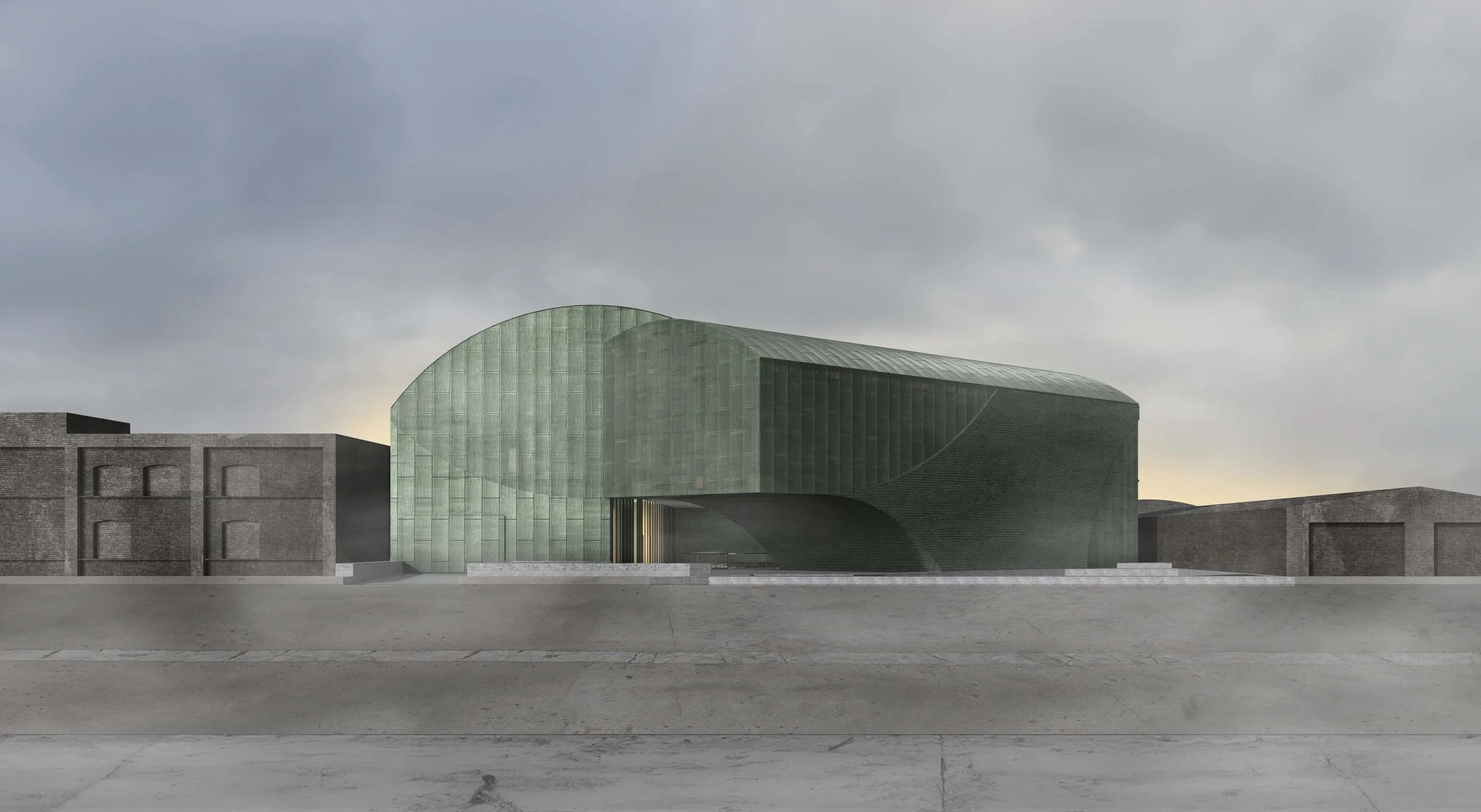
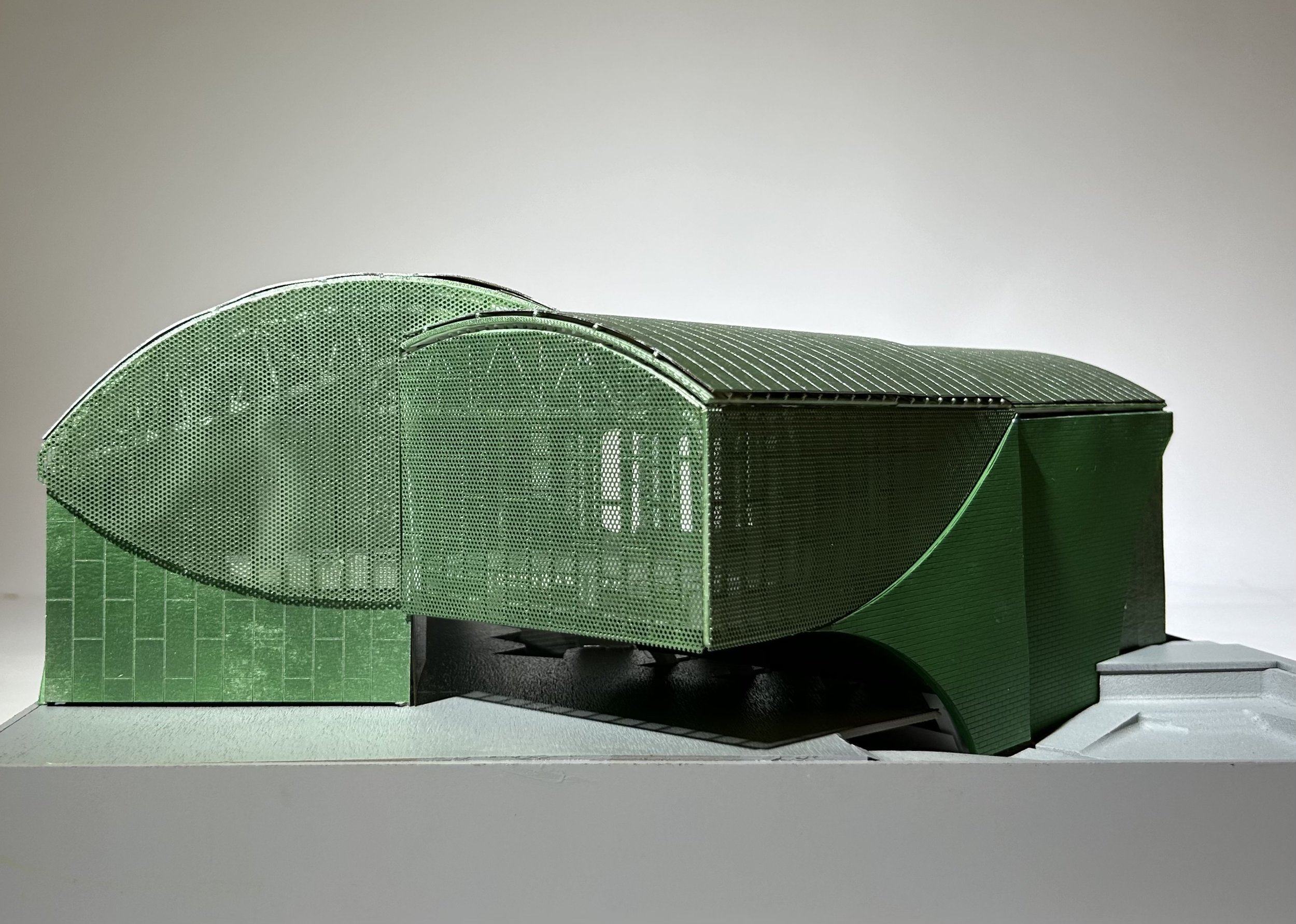
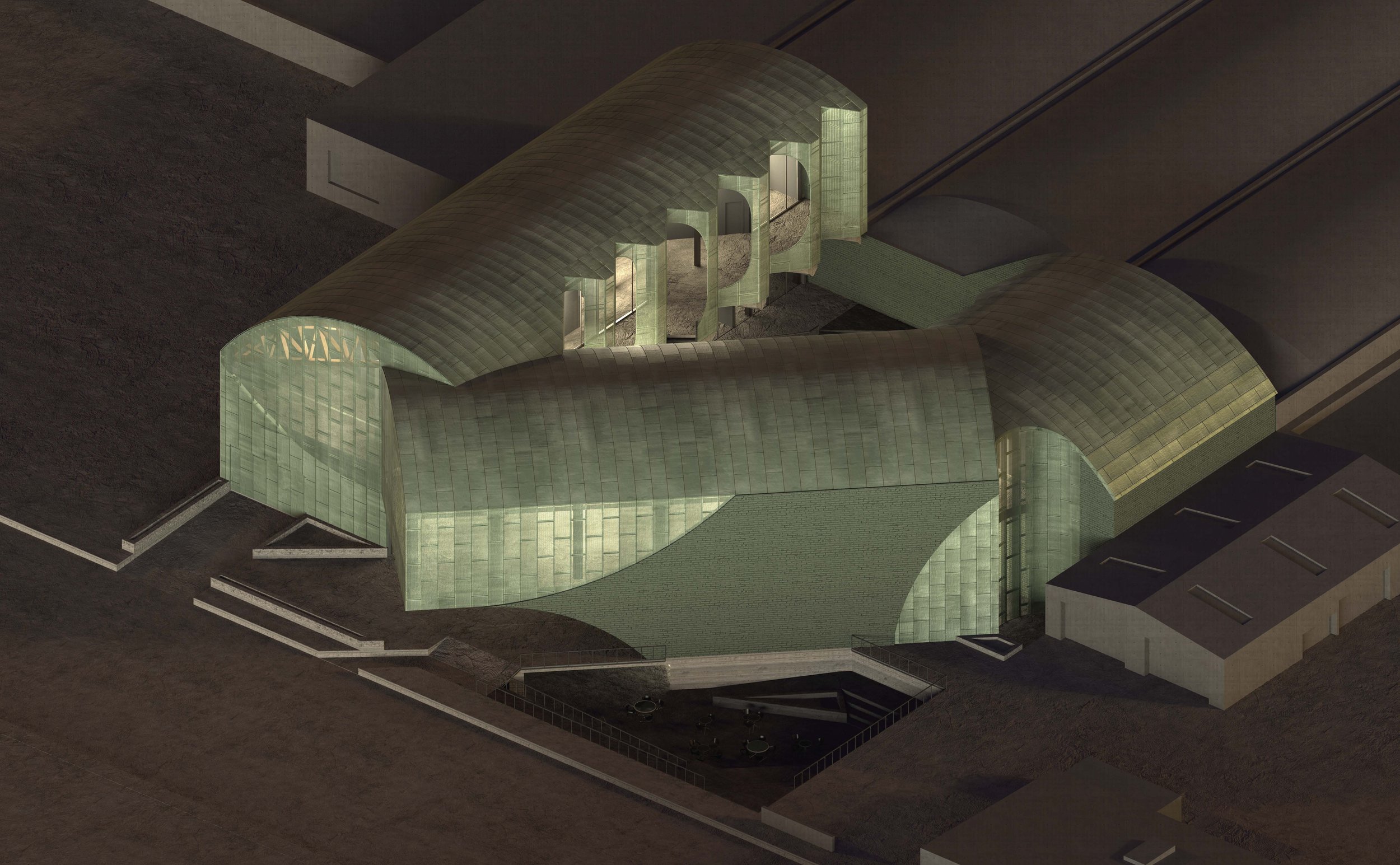
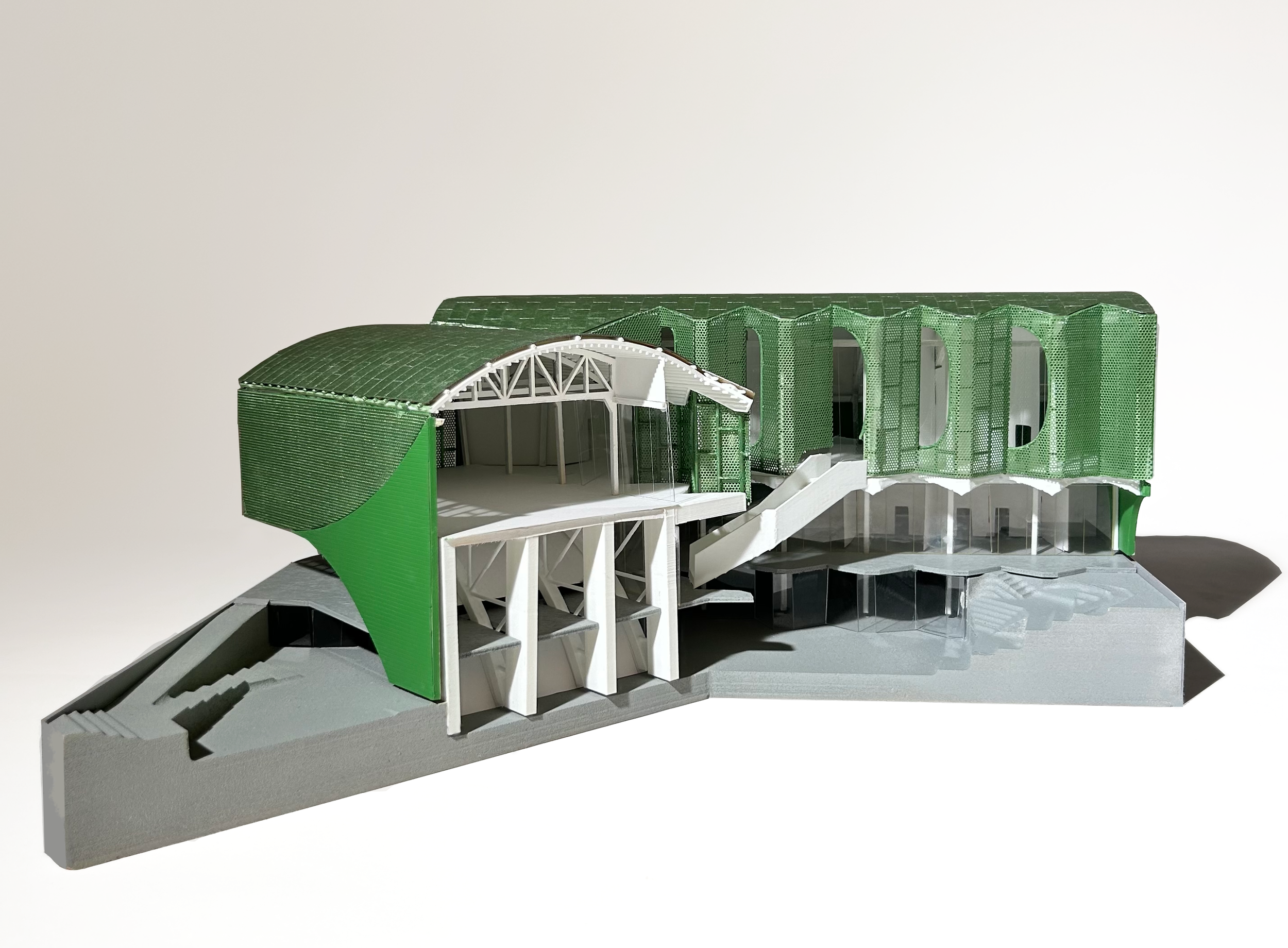
Metro East Polytechnic, a new technical high school in LA's evolving Arts District, reimagines a set of simple bowstring truss buildings into a collaborative campus — using adaptive reuse to reduce waste, preserve history, and root sustainability in the building's own structure.
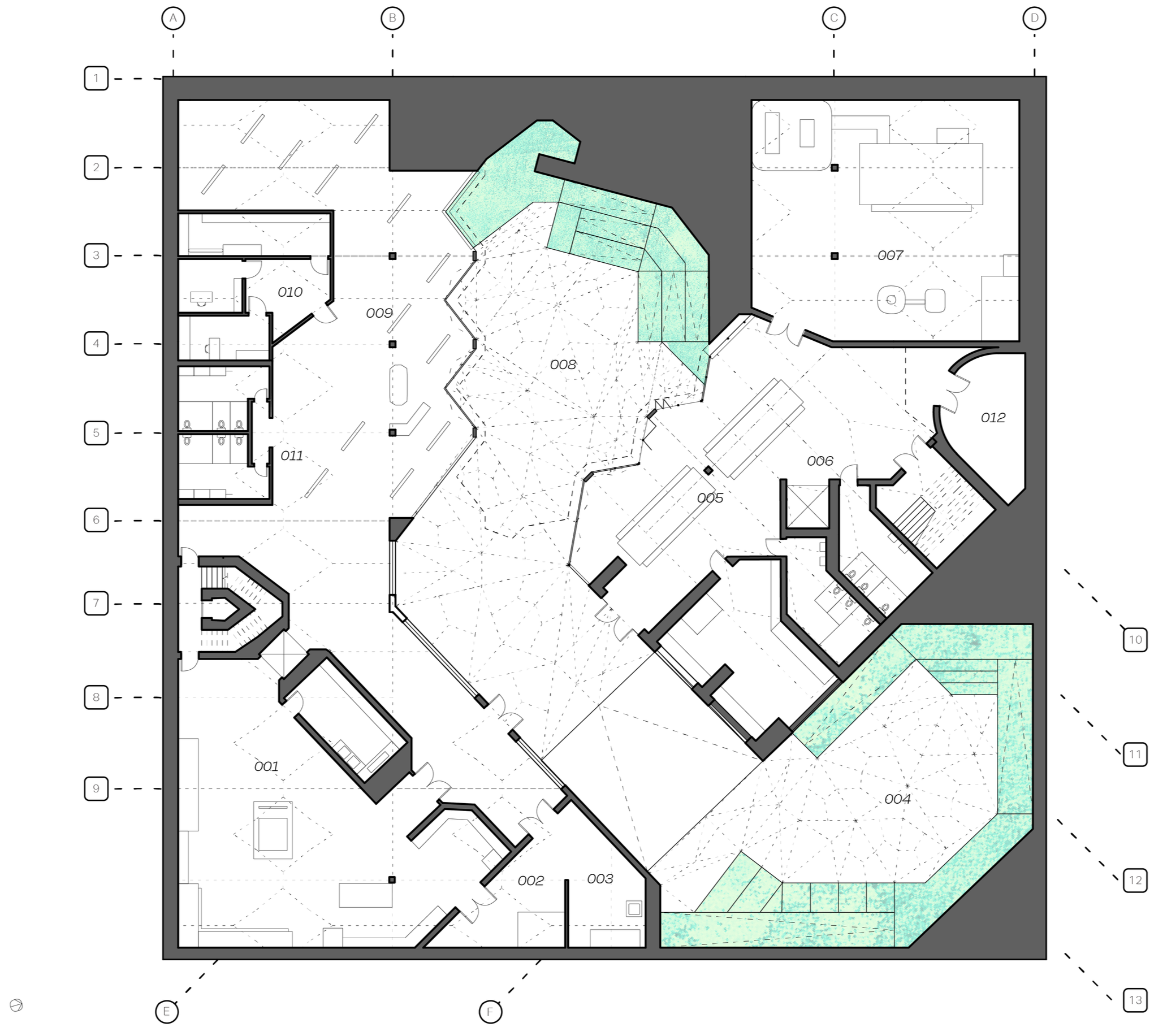
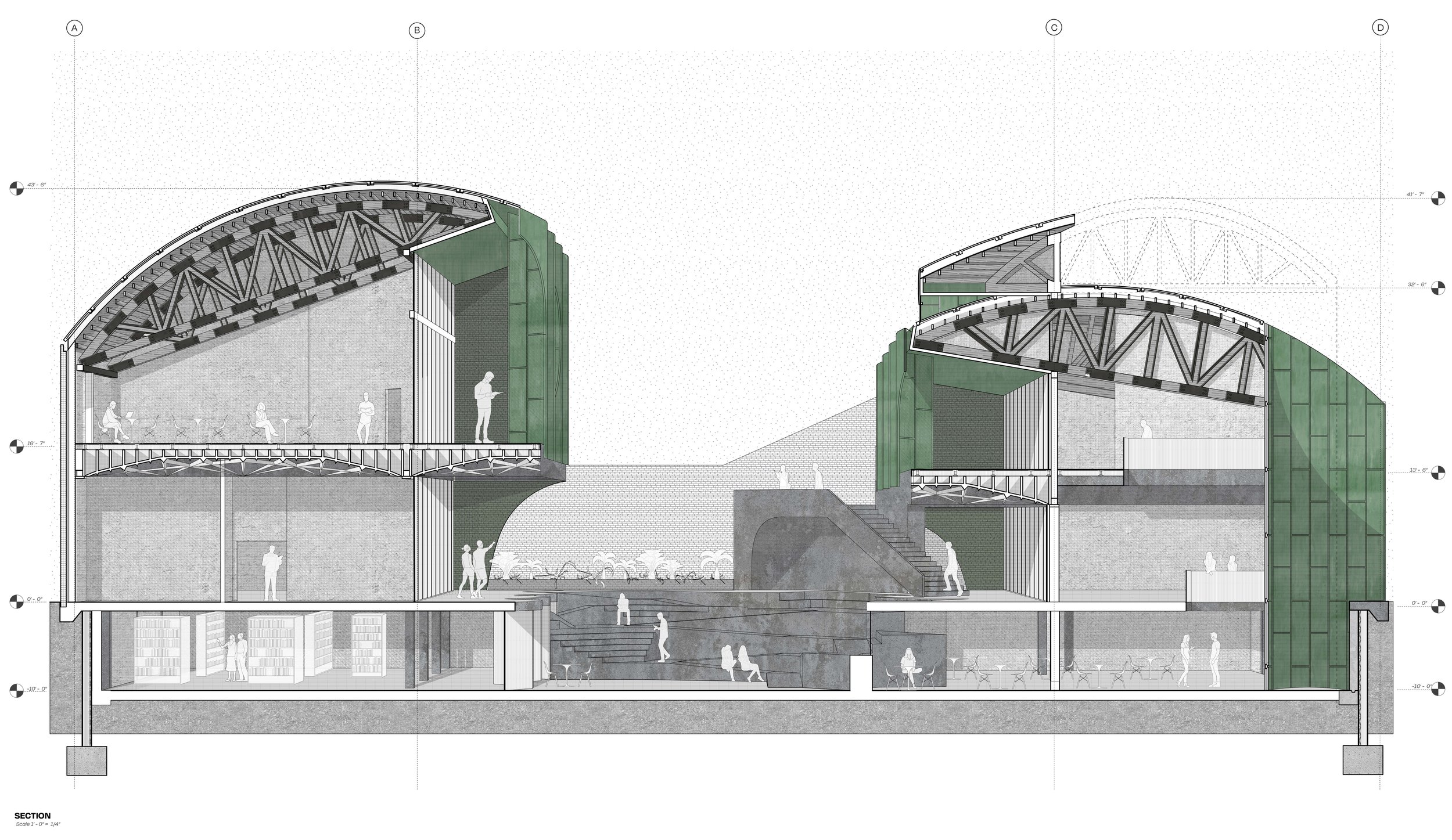
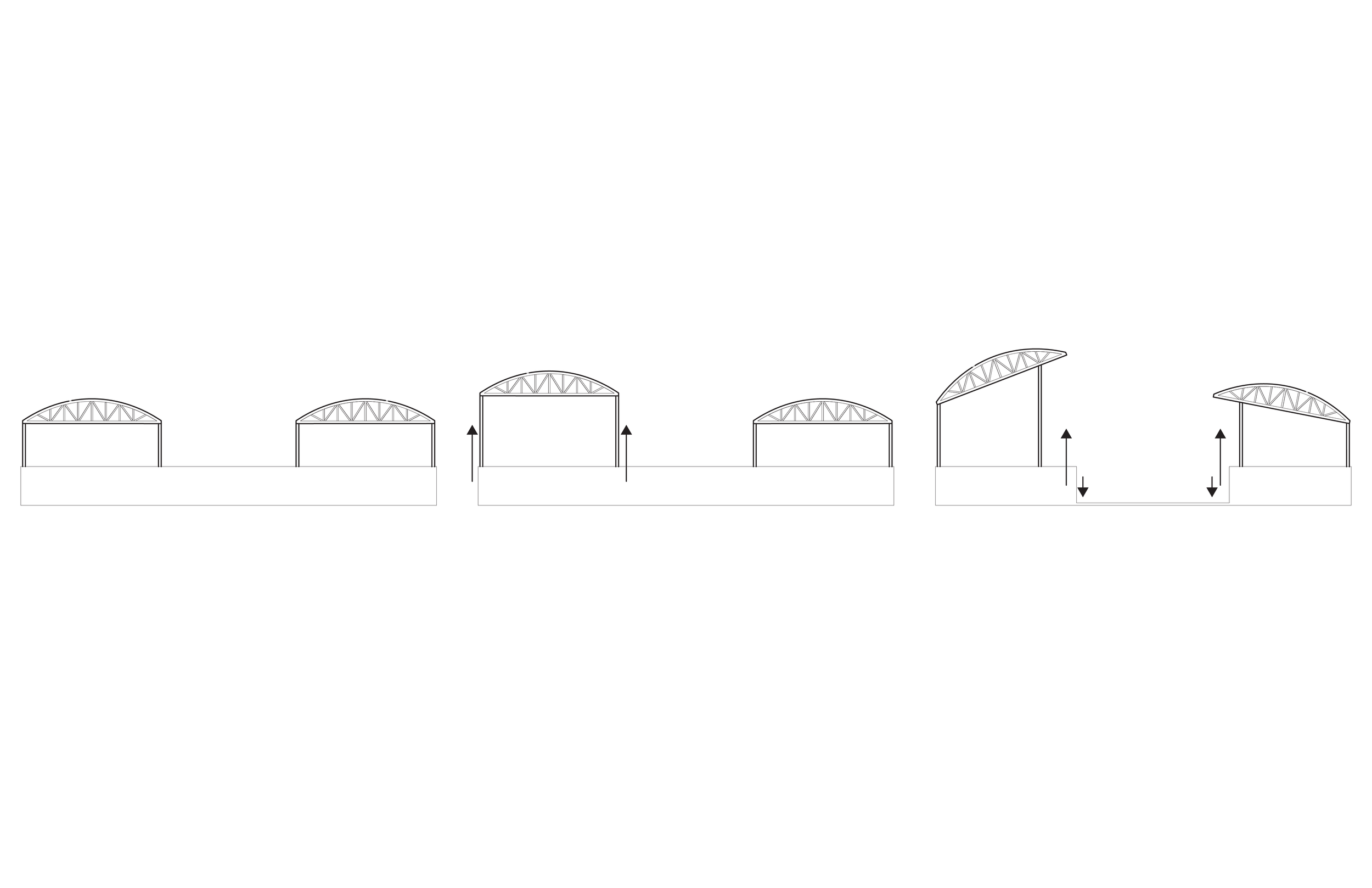
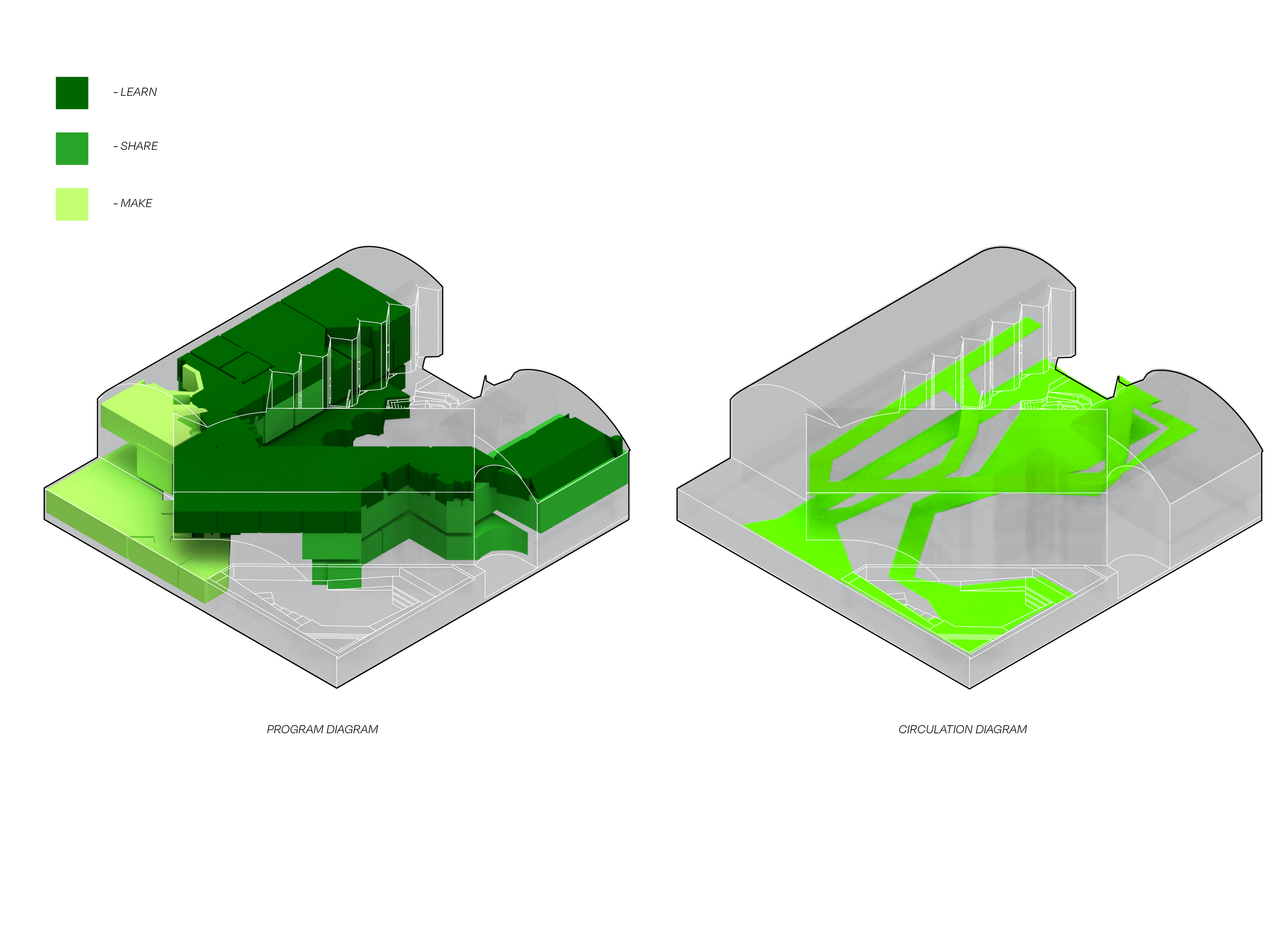
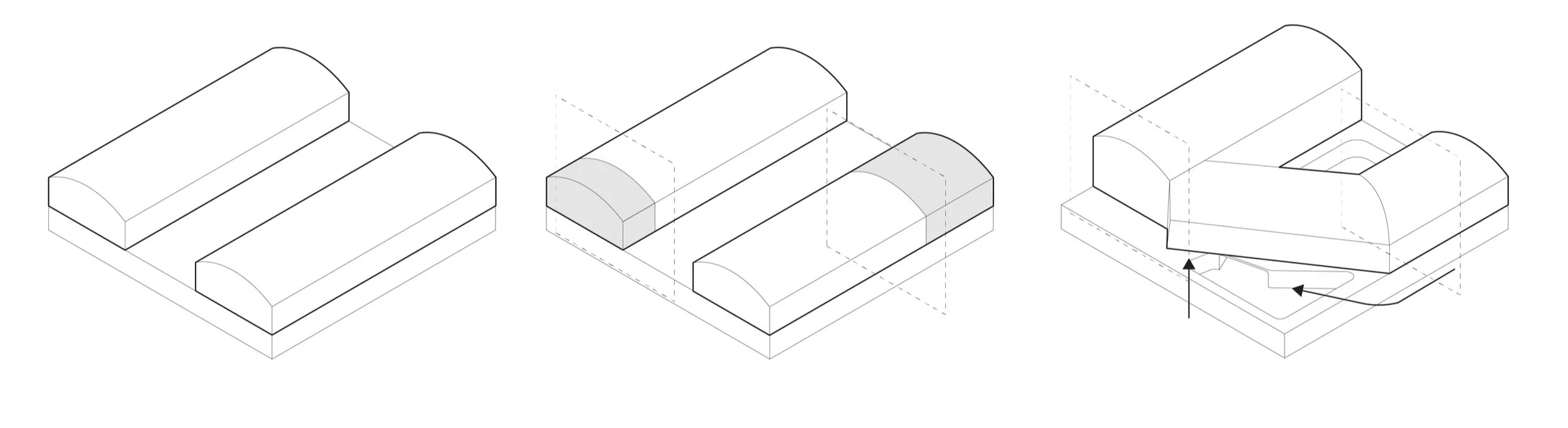
The design transforms two existing buildings by cutting, shifting, and digging into the site, opening a dynamic central courtyard we call the "agora." This active, open space drives constant movement between social, learning, and making — the three modes the school is built around.
The Underbelly
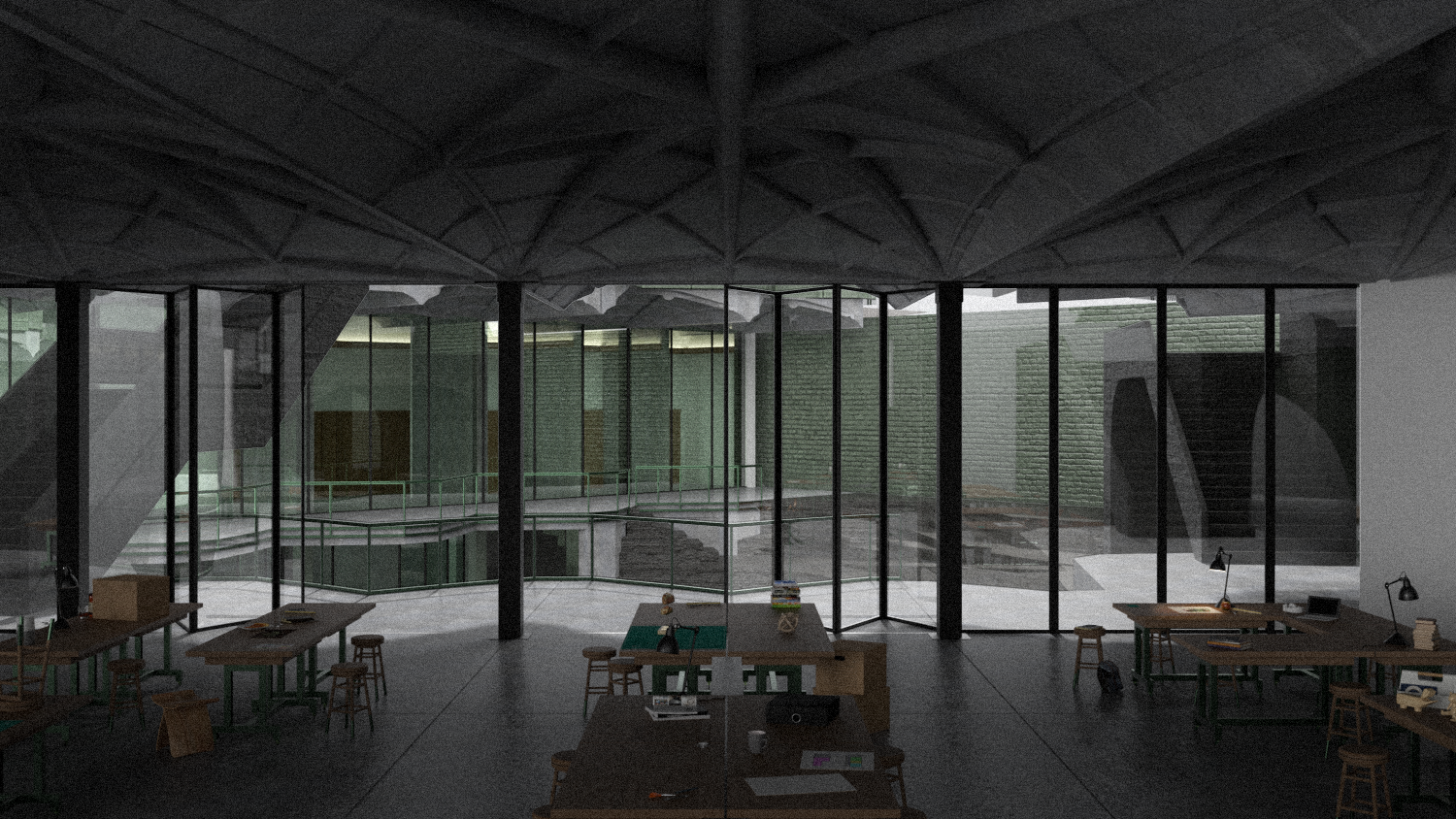
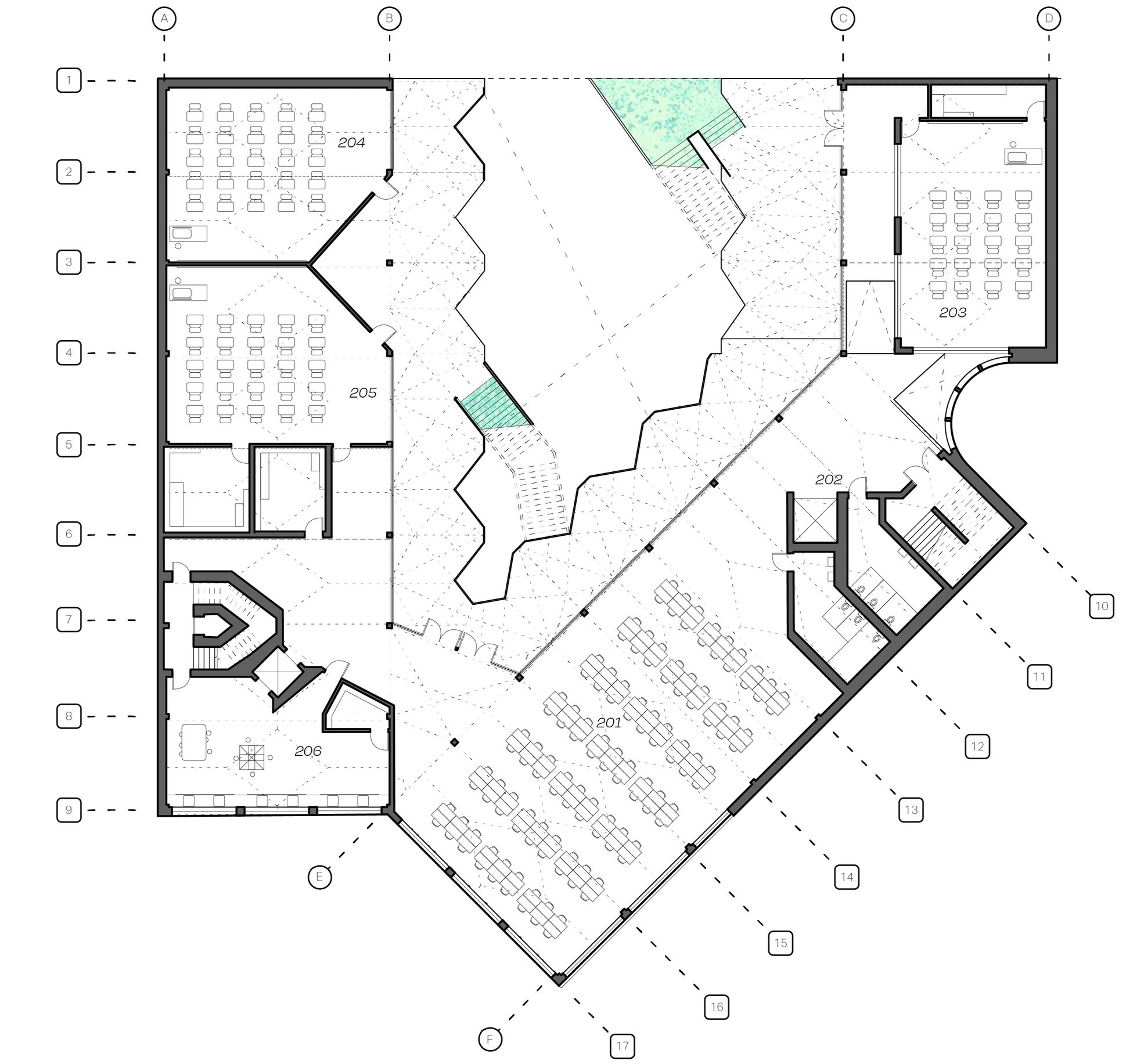
Visitors enter beneath a cantilevered section of the building, stepping directly into the agora. Ramps, stairs, and shaded seating support everything from performances to outdoor study, and a continuous ramp carries that energy down to the basement, where the café, workshop, library, and gallery sit along a transparent facade that keeps the interior visible and daylit from the courtyard. Exterior stairs lead up to classrooms and studios, reached by breezeways that double as sun-shading.
The Structure
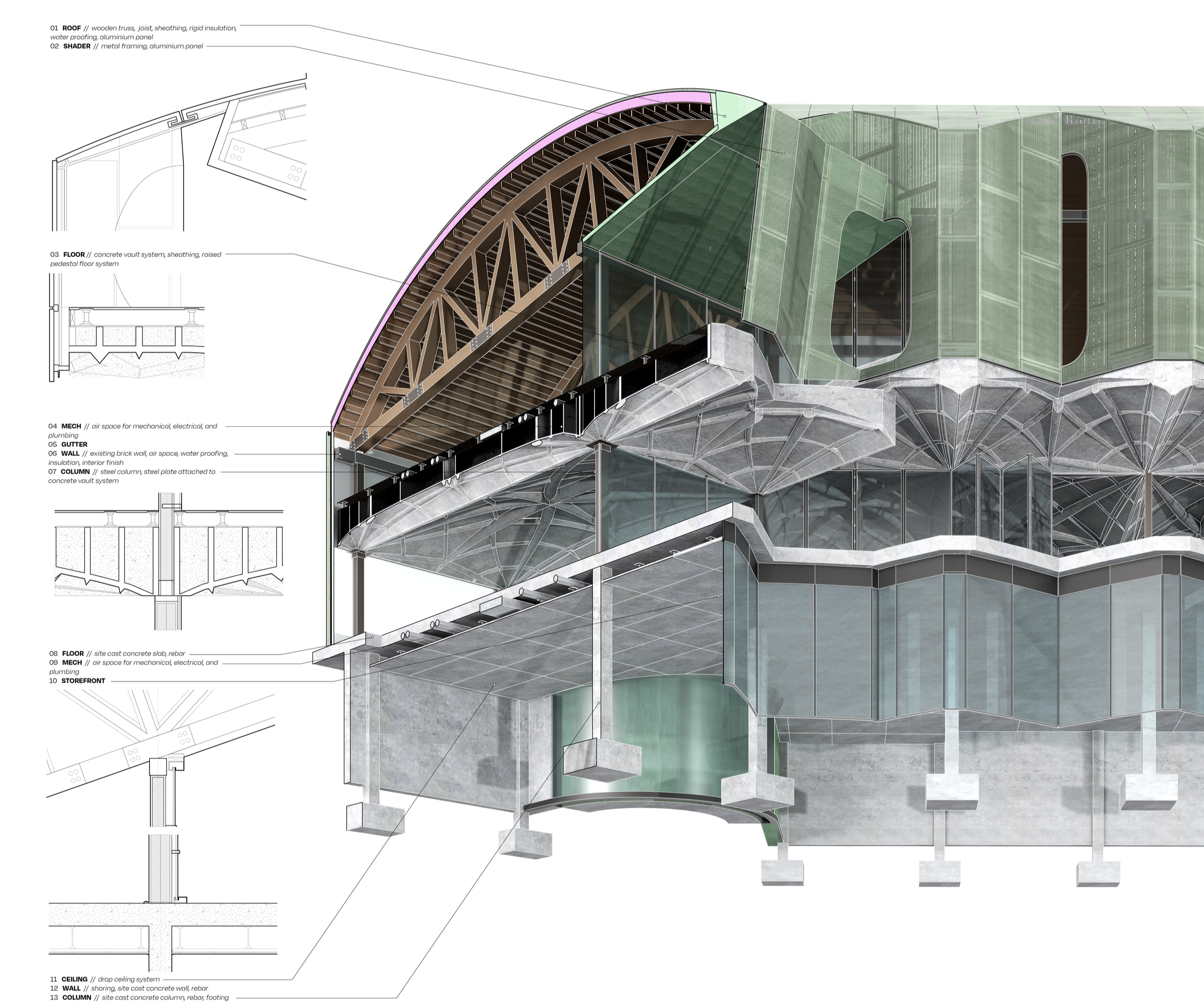
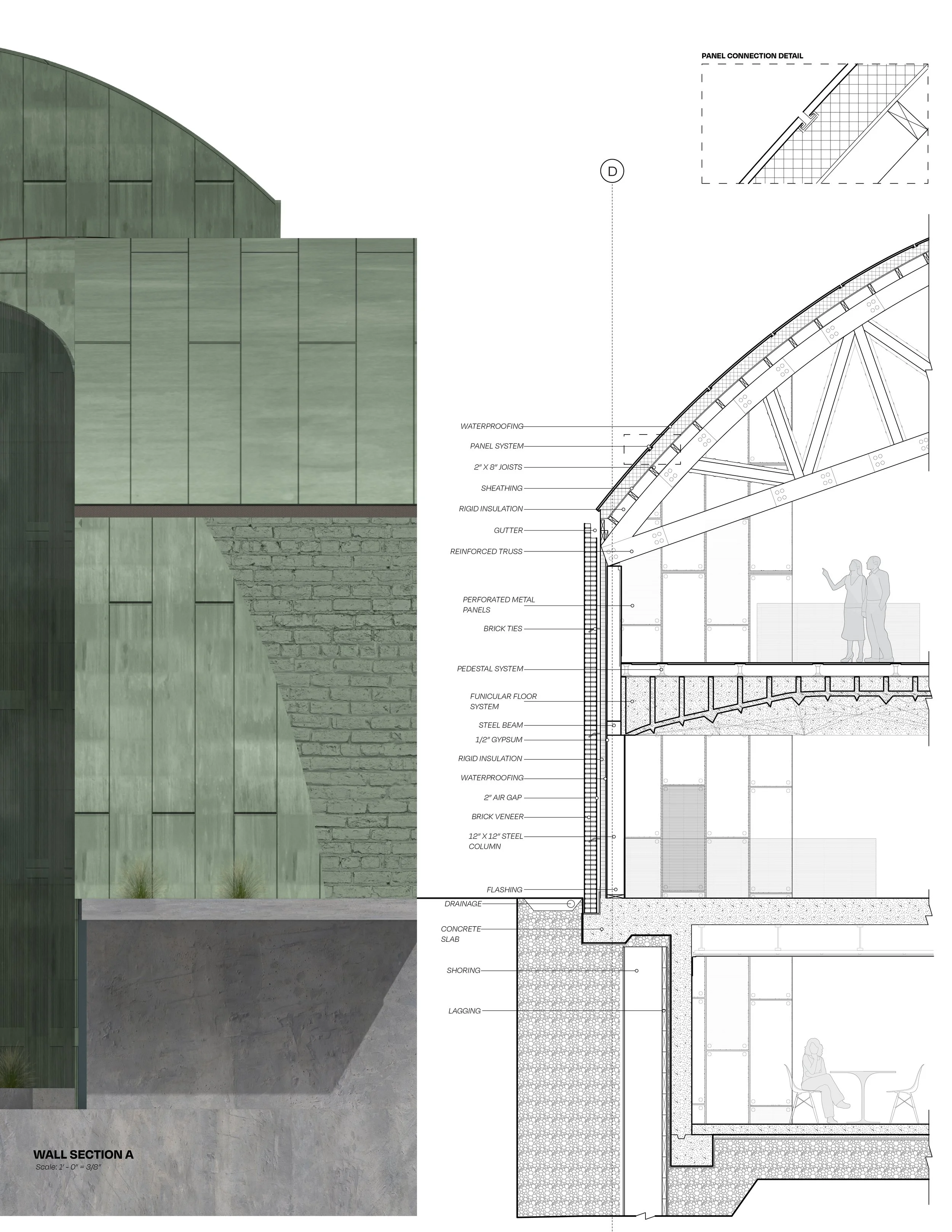
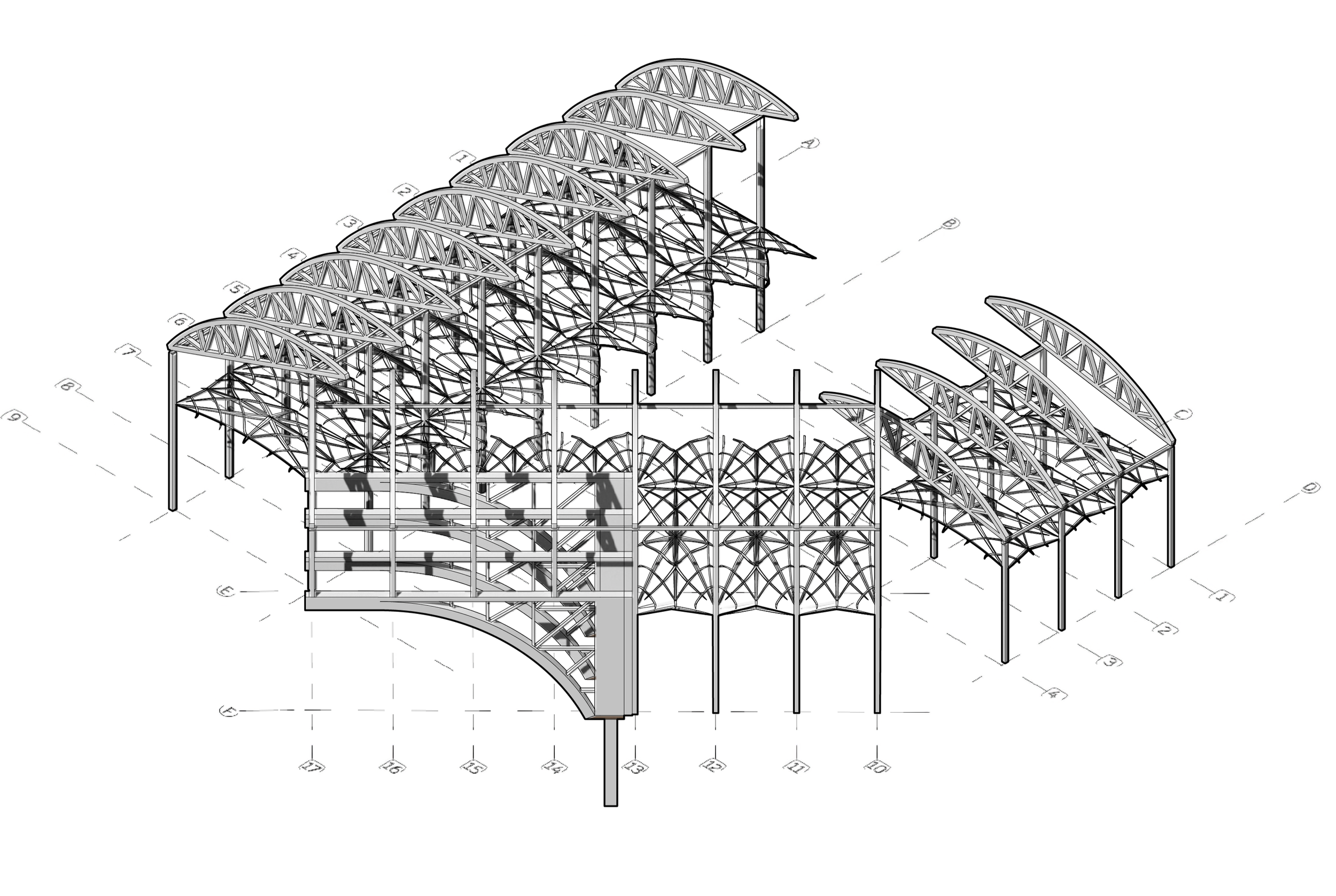
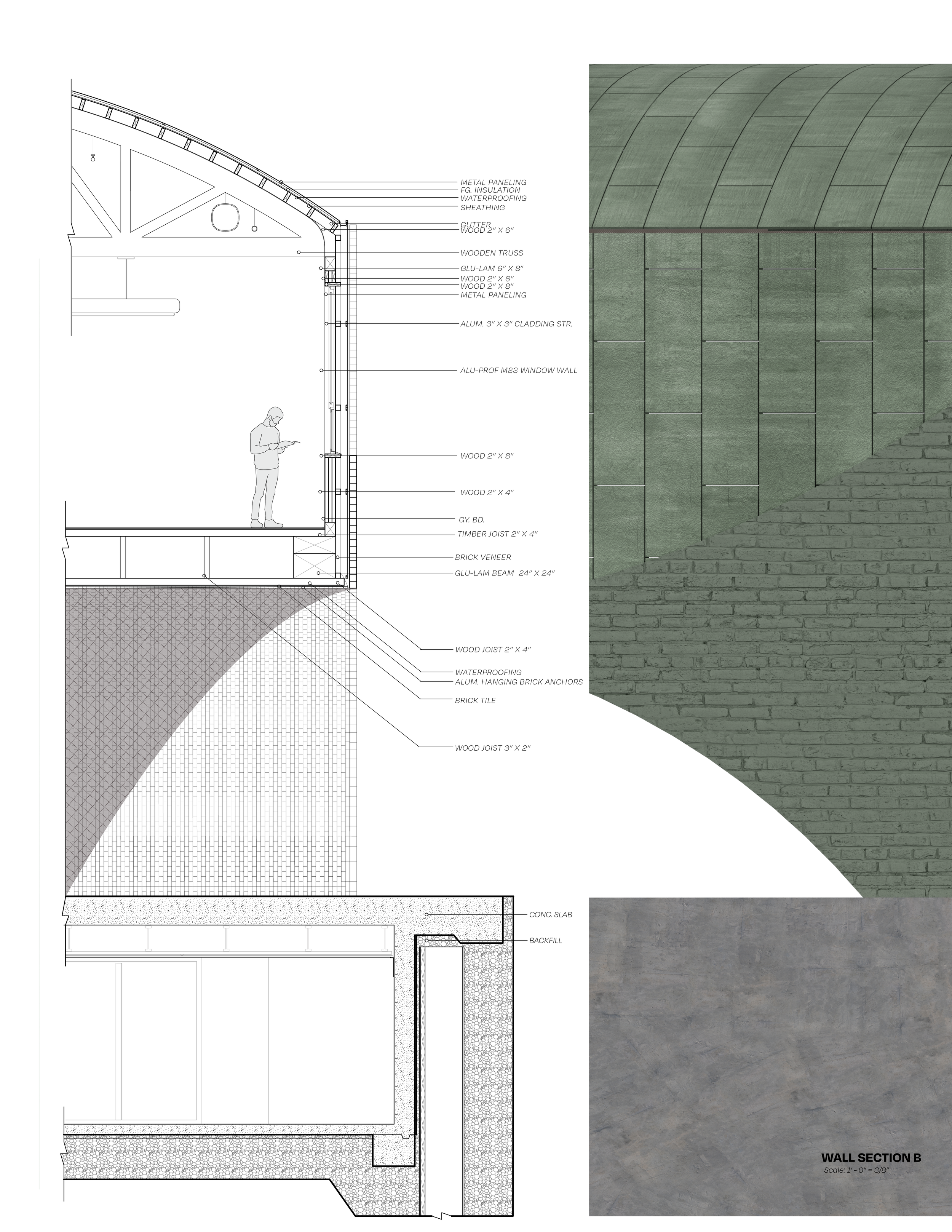
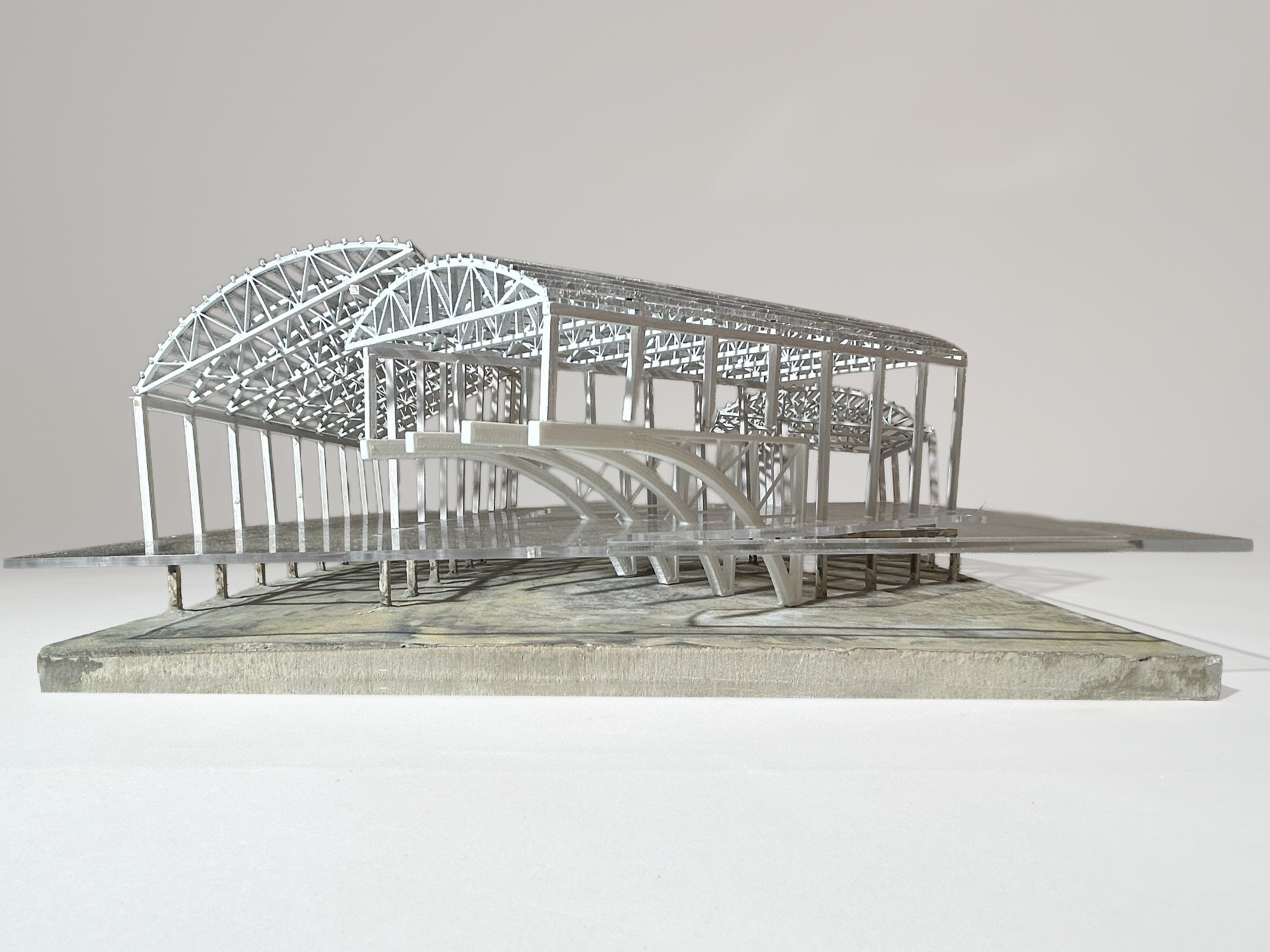
Adaptive reuse shapes the building at a structural level, not just a formal one. Roofs were raised and the column grid repositioned to open up communal space; south-facing trusses were tilted for shade, north-facing windows extended for daylight. Construction methods carry the same sustainability logic further: 3D-printed molds, developed from Block Research Group research, form modular concrete components that cut concrete use by 70% and eliminate rebar entirely.
That structural logic surfaces on the exterior, too — projected lines across the facade shift its transparency as viewers move past, alternately revealing and concealing the interior. Brick salvaged from the original structures is worked into new patterned elevations, tying the finished building back to what stood there before